Since I began this blog on February 1, 2015, it's been fun to watch it grow. Sometimes I'm amazed to see which posts were viewed most. I have no idea when I begin a post which topic most people are interested in. I post my daily photo or photos about the people, places, artwork, animals, vineyards, gardens, and even the sky with a few comments or observations and hope they will bring a new perspective on something ordinary or introduce something new to my readers. Here are the most read posts for each month since the blog began in February. Most have more than one photo.
Part of Sycamore Herb Farm Herb Garden after the fire before it reopened,
Fat Cat Farm used to be Sycamore Herb Farm, owned by Bruce and Sandy Shomler. When I first moved to Templeton, California in 1993, it was one of my first discoveries, only a mile east of my new home. I started my first garden with the herbs I bought from them. I loved the herb farm. There were animals to look at, a lush herb garden that let you know what the herbs you bought might grow into, and a marvelous gift shop full of fresh herbs, herbal gifts, books about herbs, and other wonderful things. There was also an antique car right in the gift shop. It was the kind of place I could easily get lost in. I often would go there on Sunday afternoons just to look around and relax because they had made it a beautiful place.
Then, in 2004, a terrible thing happened. A fire burned down the main building and I'm not sure what else, but Sycamore Farm closed. When it reopened, it had become a tasting room for Lone Madrone Winery, which radically changed the atmosphere of what used to be the old gift shop, but the herb farm also reopened in 2007. I was glad to see it back and continued my herb-buying trips. Then one day when I went in, I found that the herb farm had closed once again. I bought a couple of left-over plants for half price, sorry that they were no longer loved and cared for. In 2009 I returned to Lone Madrome to take pictures of what remained of the old Sycamore Herb Farm. I was delighted when Rhoda Chute revived the herb farm and renamed it Fat Cat Farm in 2010. Unfortunately, it, too, is now gone, but it was a beautiful place that deserves to be remembered as a part of Paso Robles history. We will tour it was it was in 2010.
Isn't this entrance inviting? My real tours of Fat Cat Farm will be in video a bit farther down, but here's an idea of what's ahead. As we enter, we will pass the goats to our right. You will probably hear them before you will see them. Then the restrooms are just a bit farther on. Look ahead and to the left and you will see the herb gardens and a picnic area nestled under the trees. Continue straight ahead past the tasting room and you will find the herb farm. Its long tables were beginning to fill up again with herbs of all kinds.
Fat Cat Farm did not just offer the usual herbs you might find at a regular nursery or large garden center. In those places you normally find the most common varieties of the most common herbs. You are able to come home with a lavender, a sage or two, oregano, curly parsley, flat leaf parsley, dill, basil, chives, thyme, basil, and maybe a couple of others I may have forgotten.
At Fat Cat Farm you could find many varieties of lavender, sage, oregano, mint, thyme, basil, scented geraniums, and maybe some I've forgotten. On this visit I came home with tansy, which I had wanted for years. I got some pink grapefruit yarrow and some bronze fennel. Rhoda Chute, the owner of Fat Cat Farm, also recommended some plants I'd never heard of before to meet some of my needs. These were a silver germander and variegated sweet myrtle. I was also able to get some German chamomile that I needed.
Rhoda herself is a treasure. When I go to places like Home Depot and other garden centers, I'm on my own. They have few people who can make recommendations on what will meet your needs. Rhoda knows her stuff and can answer questions even about what she doesn't have yet. She patiently helped me find what I needed. She was planning big things for the future of Fat Cat Farm. Once all the herb beds were full again, she planned to move on to providing fresh-cut flowers and newly harvested herbs. She also planned to have heirloom cottage flowers and vegetables and plants that are hard to find anywhere else.
Just as Sycamore Herb Farm before it, Fat Cat used organic methods. I knew that the plants I bought would not have seen chemicals or poisons. Since I also avoid those things, I was very pleased to buy anything I could at Fat Cat Farm. I really miss having it a mile east of me.
That's Rhoda you see walking across the screen as we enter Fat Cat Farm. We'll pay a brief visit to the goat and her kid and then look around the herbs near the entrance for a bit. As we approach the Lone Madrone Tasting Room on the way to the Fat Cat Farm, Rhoda walks by again and I threaten to come back and interview her someday soon. We walk past the tasting room and out to the area where the herbs are sold and take a brief look at the butterfly garden behind that area, the growing beds for the herbs, and a new planting area. Another video will take a closer look at the butterfly garden.
A closer look at the Butterfly Garden at Fat Cat Farm, June 15, 2010
This video focuses on just the Butterfly Garden and a more extensive look at the herb store area as they were in 2010.
A Closer Look at Fat Cat Farm's Growing Beds
This very short video records my conversation with Rhoda, the owner, about the plants in this bed and her history with the farm.
Ok. I like to watch animals because I don't have any. This video is just goats talking to each other and me talking to the goats. These are the animals your children might like to watch if you visit. You met them briefly on the way in on the first video.
We all know that an organic farm needs a lot of manure, and it has to come from somewhere. I suspect that the chickens and goats helped provide it. So let's meet the chickens that lived at Fat Cat Farm. Your children might also like to watch them.
It breaks my heart that the gardens are gone. You can click any photo to make it larger for a more detailed view.
Since Fat Cat Farm closed, I now rely on Serena Wyatt at Grown from the Heart to supply me with herb and vegetable seedlings. She is very helpful and I like doing business with her at the Templeton Farmers Market.
Do you remember Sycamore Herb Farm or Fat Cat Farm? Do you miss having a local herb farm as much as I do? Do you have a local herb farm where you live?
I love observing nature. That's one reason I often walk through Larry Moore Park. It is open space with paths along the Salinas River, currently dry. One thing that frustrates me as I walk through the park taking pictures is that I can't identify everything I see. One thing I didn't have a name for is the plant in this photo. It really adds color to the park at this time of year. This photo shows several plants in a group.
I decided before starting to write this that I would go back to the park today and take some close-up photos that would give me a good look at the individual flowers. I wanted to research them and find a name. As you see, I succeeded. Here is an enlarged view of the flowers. They really do resemble Fushia flowers a bit. Learn more and see a video on the Catalina Fushia here.
Other plants are also in bloom. One is the willow that you see all over the park. This one was right beside the path. Many are in the riverbed or beside it. Do you see the bee? If you need a closer look, just click the photo.
I finally identified another plant I seem to see everywhere -- even in my own yard. I've always assumed it to be a weed, and since I study weeds I was frustrated that I didn't know this one's name. The internet has more information than I have available in my books, and so I know now that this is a Telegraph Weed.
Last today, are the many coyote brush plants you will see not only in the park but on most rural roadsides and county wild places. It is just beginning to bloom and will be ready to lighten up the winter landscape in the bleak months. I think of coyote brush as California snowdrifts.
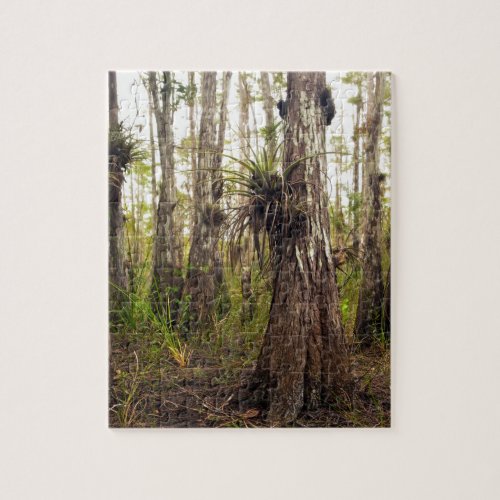
Harmony, California isn't a very big town. It really is more like a small neighborhood. There was, however a garden or two near the pottery shop. One of the most interesting sights for me there was that of bromeliads growing in trees. In this photo you can see a group of them on a host tree.
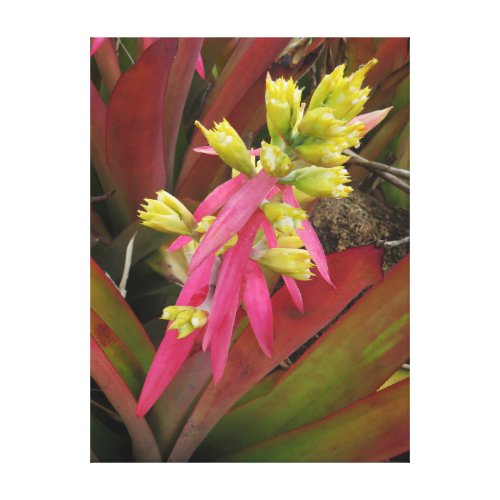
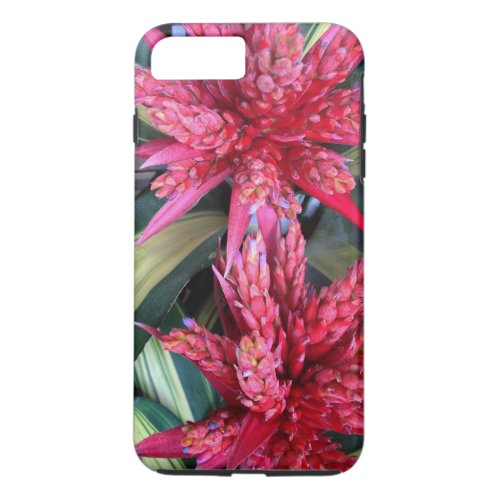
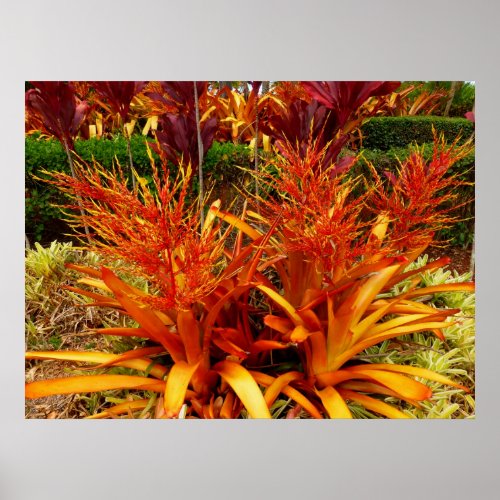
Most of the plants I saw in the gardens were bromeliads - stemless perennial plants with leaves springing up from the center. Some of these were epiphytes, also known as air plants. Those are the ones you see in the trees. They were also growing on the ground under the trees. Most weren't blooming, but this one was.
Some of the other flowers I could not identify were also in bloom. You can see them below. The one with light purple flowers looks very much like a sage variety to me, or something in the mint family.
I have no idea what this bright yellow and orange one is. If you recognize it, I'd love to have you identify it in a comment below.
This rock garden was next to a metal wall. It consisted of a raised bed with another garden bed under it.